The Rise of Handcrafted Typography: Why Helena Is Redefining Authentic Design
In a digital landscape saturated with sleek, precision-engineered typefaces, a quiet but powerful shift is underway. Designers, brand strategists, and content creators are increasingly turning away from sterile perfection in favor of warmth, character, and a distinctly human touch. At the center of this movement stands Helena, a handmade font that delivers an authentic handcrafted feeling to any project. More than just another typeface, Helena represents a broader cultural and professional revaluation of what makes visual communication truly resonate.
This article explores what Helena is, why it matters in the context of current creative and market trends, and how professionals across industries are leveraging its unique qualities to stand out in an overcrowded visual environment.
What Helena Brings to the Modern Designer's Toolkit
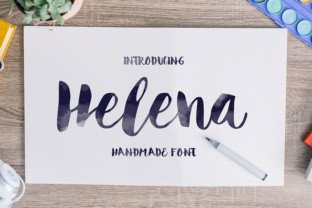
Helena is a handmade font meticulously crafted to capture the nuance, imperfection, and personality of natural handwriting. Unlike standardized digital typefaces, Helena carries subtle variations in stroke weight, letter spacing, and terminal shapes—details that mirror the organic rhythm of a human hand moving across paper. Each glyph feels intentional yet unforced, giving any text an immediate sense of authenticity and care.
For professionals working across branding, print, and digital media, this distinction is critical. In a marketplace where consumers are increasingly skeptical of mass-produced messaging, Helena offers a way to inject sincerity into visual identity without sacrificing legibility or professionalism. It occupies a sweet spot between casual charm and deliberate craftsmanship, making it suitable for everything from logos and wedding invitations to envelopes, posters, and beyond.
The Story Behind the Font
Every handmade font carries a story, and Helena is no exception. Designed with an emphasis on natural flow and emotional warmth, it was developed to address a growing need among creatives for typefaces that feel personal rather than automated. The font's character set is built around the idea of imperfection as a feature—a philosophy that aligns closely with the broader artisanal revival we are witnessing across design, food, fashion, and lifestyle industries.
Helena does not try to mimic the uniformity of machine-made type. Instead, it embraces the slight irregularities that make handwriting uniquely human. For the designer or entrepreneur looking to communicate trust, approachability, and originality, this makes Helena a strategic choice rather than merely an aesthetic one.
Why Handmade Fonts Matter in Today's Visual Landscape
The resurgence of handmade typography is not arbitrary. It is a direct response to several converging trends in consumer behavior, technology, and creative practice. Understanding these forces is essential for anyone who wants to make informed decisions about their visual communication strategy.
The Demand for Authenticity in Branding
Modern audiences are sophisticated. They can detect corporate gloss and generic design language instantly—and they often react with indifference or distrust. Research consistently shows that authenticity is one of the most valued qualities in a brand, influencing everything from purchase decisions to long-term loyalty. Handmade fonts like Helena help brands communicate that they are not just another faceless entity, but rather a group of people with genuine values and personality.
Consider the rise of small-batch product packaging, the proliferation of hand-lettered signage in cafes, and the preference for real photography over stock imagery. These are all manifestations of the same underlying shift: a hunger for the real, the crafted, and the personal. Helena feeds directly into this demand by giving designers a tool that immediately signals care, attention, and human involvement.
From Pixel-Perfect to Human-Centered Design
For over two decades, digital design was dominated by the pursuit of pixel perfection. Smooth curves, consistent kerning, and flawless rendering were the gold standard. While these qualities remain important, there is now a concurrent appreciation for design that feels less mechanical and more relational. Human-centered design is not just about usability; it is about emotional connection.
Helena supports this philosophy by introducing an element of warmth that can soften the rigidity of modern interfaces and print layouts. When used thoughtfully, it can make a website feel like a personal letter, a poster feel like a hand-inked announcement, and a logo feel like a signature rather than a corporate stamp.
Practical Applications Where Helena Excels
Understanding the theoretical value of a handmade font is one thing. Seeing how it performs in real-world contexts is another. Helena has already found a home across a wide range of applications, each of which highlights a different strength of the typeface.
Logos and Brand Identity
For startups, creative agencies, wedding planners, and lifestyle brands, a logo built with Helena carries an immediate sense of approachability and distinction. Unlike many script fonts that can feel overly ornate or difficult to read at small sizes, Helena strikes a balance between expressiveness and clarity. Its handcrafted quality makes it ideal for businesses that want to communicate that they are small, thoughtful, or artisanal without looking amateurish.
One practical observation: when used in a logo system, Helena pairs well with clean sans-serif typefaces for accompanying text. This contrast—handmade headlines with simple, modern body copy—creates a visual hierarchy that feels both grounded and contemporary.
Wedding Invitations and Stationery
Wedding stationery is perhaps one of the most natural homes for a handmade font. Couples are increasingly seeking ways to make their invitations feel unique and personal, moving away from mass-produced templates. Helena's organic character lends itself beautifully to save-the-dates, ceremony programs, and envelope addressing. The slight irregularities in the letterforms mimic the feel of calligraphy without requiring the time or expense of a professional lettering artist.
For stationery designers, this means Helena can serve as a reliable foundation for entire suites. Its versatility allows it to work across different paper textures and printing methods, from digital print to letterpress, without losing its handcrafted essence.
Posters and Marketing Collateral
Posters, flyers, and social media graphics benefit from typefaces that grab attention quickly. Helena's handmade quality makes it particularly effective for headlines and short messages where emotion and impact are priorities. A music festival poster, a product launch announcement, or an event flyer can all gain a layer of personality simply by choosing Helena over a standard display font.
Marketers should note that Helena works best when it is given room to breathe. Using it for large, central messaging—rather than dense paragraphs—maximizes its visual appeal and ensures readability remains high.
How Professionals Are Integrating Helena Into Their Workflows
The adoption of handmade fonts like Helena is not just about taste; it is about efficiency and differentiation. Freelancers and agencies report that using a distinctive typeface reduces the amount of additional decoration needed to make a design feel complete. The font itself does much of the tonal work, allowing designers to focus on layout, color, and hierarchy.
Entrepreneurs building their own brand identities with limited resources find Helena particularly valuable. A well-chosen handmade font can elevate a simple logo or social media graphic instantly, without requiring custom lettering or expensive illustration. This democratization of good design is one of the quieter but more significant developments in the creative economy.
Moreover, as remote collaboration and direct-to-consumer brands continue to grow, the need for visual assets that communicate authenticity at scale becomes even more pressing. Helena answers this need by providing a consistent yet organic look across all touchpoints—from printed envelopes to Instagram stories.
The Broader Shift Toward Artisanal Aesthetics
Helena's relevance extends beyond the design studio. It is part of a wider cultural movement that values the handmade, the slow, and the intentional. In an era of AI-generated content and hyper-automation, the human touch has become a premium commodity. Consumers are willing to pay more for products that feel crafted, and they are more loyal to brands that seem genuine.
This trend is visible across multiple sectors. In food and beverage, craft breweries and small-batch distilleries emphasize handmade processes. In fashion, artisanal techniques and limited-edition releases command premium prices. In technology, even major software companies are designing interfaces that feel less robotic and more human. Typography is no exception.
By choosing a font like Helena, creators align themselves with this broader cultural appetite for authenticity. It signals that the creator values quality over volume, substance over speed, and connection over conversion. These signals resonate deeply with today's audiences, who are increasingly making choices based on values rather than just features.
Designing with Intention in a Handcrafted Era
What makes Helena more than a passing trend is its foundation in enduring design principles. Handmade typography has existed for centuries, and its appeal is unlikely to fade because it speaks to something fundamental in human communication: the desire to know that a message was crafted by another person, with care and intention.
For the professional designer, the marketer overseeing brand strategy, or the entrepreneur building a business from the ground up, Helena offers a practical way to act on this insight. It is not a decorative gimmick but a serious tool for building visual trust, emotional resonance, and market differentiation.
As the visual landscape continues to evolve—shaped by AI, remote collaboration, and changing consumer expectations—the ability to communicate humanity through design will only become more valuable. Helena is ready for that future because it was built on a foundation that never goes out of style: the honest, imperfect, beautiful touch of the human hand.
For anyone looking to refresh a brand, launch a new project, or simply add more sincerity to their visual communication, exploring what Helena can do is a step worth taking. The font is available through various type foundries and can be licensed for both personal and commercial use. Whether you are addressing envelopes for a intimate wedding, designing a logo for a new venture, or creating posters that stop people in their tracks, Helena brings a quality that cannot be replicated by algorithms or templates: it brings the human element back to the page.
In a world that is moving faster every day, that might be the most important design decision you can make.