Naira Script: A Modern Calligraphy Font with Built-In Water Color Flexibility
When evaluating typefaces for branding, print materials, or digital design, the balance between personality and practicality often determines whether a font becomes a long-term asset or a one-use novelty. Naira Script enters this space as a modern calligraphy script that combines a light, feminine aesthetic with a practical bonus: a set of forty pattern water colors that can be layered beneath or alongside the typeface. For designers and content creators who work with invitations, logos, stationery, or signage, understanding what this font actually delivers—and where it may fall short—matters more than surface impressions.
What Naira Script Is and What Makes It Distinctive
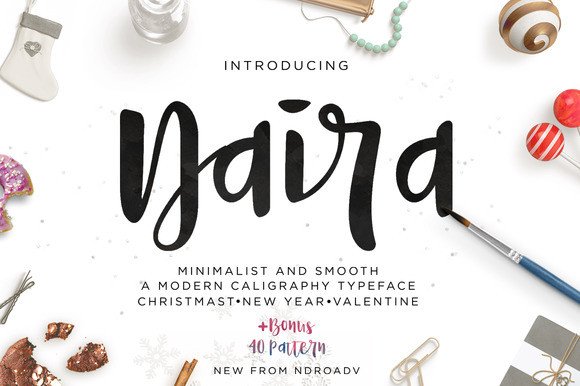
Naira Script is a handwritten-style calligraphy font with a deliberately playful and unrefined character. Unlike polished copperplate or formal script faces, Naira leans into an informal, almost whimsical stroke pattern. The letterforms are rounded, uneven in weight, and carry a sense of spontaneous movement. This is not a font designed for corporate年报 or legal documents. Its strength lies in situations where a human, approachable, or slightly quirky tone is appropriate.
The term "funny" in the font description is not a criticism of quality but a descriptor of style. The letters have a loose, bouncy rhythm that avoids rigid baseline alignment. Ascenders and descenders vary in length, and the overall impression is one of hand-lettered charm rather than mechanical precision. For projects that require warmth or a personal touch, that character can be an advantage. For projects that demand strict uniformity or high legibility at small sizes, it may introduce challenges.
Practical Applications and Where the Font Performs Best
Naira Script is positioned for a wide range of uses: envelope designs, logos, titles, wedding invitations, letterheads, labels, newsletters, signage, posters, and badges. In practice, some of these applications suit the font better than others. Based on the stroke width and the irregular spacing between letters, the font works best at medium to large display sizes. Posters, titles, wedding invitation headers, and signature-style logos are natural fits. At smaller sizes—such as body text in newsletters or detailed labels—legibility drops noticeably, especially when printed on uncoated paper or viewed on lower-resolution screens.
The font’s feminine and fresh aesthetic makes it particularly effective for event branding, boutique packaging, and creative business identities. A florist, a calligraphy-based stationery shop, a wedding planner, or a lifestyle blogger could use Naira Script to reinforce a handmade, personal brand voice. For entrepreneurs and small business owners who handle their own design work, the font offers a way to achieve a custom lettered look without commissioning original hand lettering for every project.
Logo and Title Work
For logos, Naira Script works best as a standalone wordmark or as the primary display element in a lockup with a simpler sans-serif or serif secondary font. Pairing it with a clean, neutral typeface helps anchor the script’s looseness and prevents the overall design from feeling chaotic. Titles on book covers, blog headers, or event programs also benefit from the font’s distinct personality, provided the text is short—ideally one to three words—and set at a size where the uneven strokes read as intentional rather than messy.
Wedding and Event Stationery
Wedding invitations and related stationery are a core use case for Naira Script. The font’s romantic, hand-drawn feel aligns with the expectations of many brides and grooms seeking a personal aesthetic. When used for the couple’s names or key event details on the invitation, it creates a focal point. Supporting details, such as date, time, and location, are better set in a simpler companion font to maintain readability. The included water color patterns add another layer of customization for invitation suites, as they can be applied as background washes or accent elements behind the typography.
The 40 Pattern Water Colors: A Practical Asset
One of the more distinctive features of Naira Script is the inclusion of forty pattern water colors. These are pre-made texture files—likely in raster format such as PNG or JPEG—that can be placed behind the type or used as design accents. For designers who work with watercolor aesthetics but lack the time or tools to create their own textures from scratch, this collection offers immediate variety. The patterns cover a range of color palettes and wash styles, which allows for mixing and matching across different projects.
From a practical standpoint, the value of these water colors depends on your workflow. If you frequently design wedding invitations, social media graphics, or product packaging that calls for a hand-painted look, having forty ready-to-use textures saves significant production time. If your work relies on vector-only assets or requires precise color matching for brand guidelines, the raster water colors may need additional processing or may not integrate cleanly into your existing file structure. The description suggests these patterns can be layered to create an "instant beautiful typeface," meaning the font itself is designed to sit on top of or interact with these backgrounds.
One limitation to consider: the water colors are patterns, not individual brushes or editable vector shapes. This means resizing them may lead to pixelation if you push them beyond their original resolution. For print work, you will want to confirm the file resolution matches your output requirements. For digital use, they should work well at standard screen sizes.
Usability, Consistency, and Reliability in Daily Work
Naira Script, like many script fonts, requires careful spacing and kerning adjustments. The default letter spacing may work for some combinations but feel too tight or too loose for others. Manual tracking adjustments are almost always necessary when using the font in a logo or a headline. The font includes standard OpenType features such as alternate characters and ligatures, which adds flexibility, but these features require compatible software (Adobe Illustrator, InDesign, or similar programs that support OpenType).
Consistency across different platforms is generally good for a script font of this style. It installs as a standard OTF or TTF file and behaves predictably in major design applications. Web use is possible via @font-face embedding, but load performance and rendering quality should be tested on multiple browsers and devices. Script fonts with uneven stroke widths can appear different on screen versus in print, so proofing before final output is recommended.
Who Benefits Most from Naira Script
The audience for Naira Script overlaps significantly with creative professionals and small business owners who produce their own marketing materials. Freelance graphic designers who handle branding, wedding stationery, or packaging will find the combination of font and water color patterns useful for delivering a cohesive look without building every element from scratch. Bloggers and content creators who need a distinctive display font for headers or social media graphics can also benefit, provided they pair it with a more readable secondary font for body text.
Educators and serious hobbyists who teach or practice calligraphy may appreciate the font as a reference for modern script forms or as a time-saving tool for mockups. However, those seeking a highly authentic, hand-lettered look may still prefer actual hand lettering over any typeface, as even the best script fonts carry some degree of repetition and lack the subtle variation of a real hand.
Ideal Project Types
- Wedding and event invitation suites
- Boutique brand wordmarks and logos
- Social media quote graphics and headers
- Product labels for artisan or handmade goods
- Signage for cafes, florists, or creative studios
- Blog and website hero titles
Less Suitable Applications
- Long body text or paragraphs
- Small print sizes (below 14–16 points)
- Corporate or institutional branding
- Legal documents or formal correspondence
- Low-resolution digital displays
Strengths and Practical Limitations
The font’s primary strength is its distinct personality. In a market saturated with safe, neutral typefaces, Naira Script offers a clear point of view. When used appropriately, it can elevate a design and communicate a specific mood—whimsical, warm, feminine, and approachable. The included water color patterns add genuine value for designers who work in that aesthetic, potentially saving hours of texture creation.
On the limitation side, the font’s informality can work against it in contexts that require polish or authority. The uneven stroke weights and loose spacing may not appeal to clients who prefer clean, modern minimalism. Additionally, the water color patterns, while convenient, are not infinitely scalable, and their resolution should be verified for large-format print uses such as posters or signage. The font also requires a moderate level of design experience to use well; beginners may struggle with kerning and pairing decisions.
Long-Term Value and Final Considerations
As a creative asset, Naira Script holds its value best for designers and entrepreneurs who have a consistent need for hand-lettered display typography. It is not a workhorse font for everyday text, but it is a reliable specialty tool for specific use cases. The inclusion of forty water color patterns extends its utility beyond typography alone, making it a small bundle of design resources rather than just a single typeface.
When deciding whether Naira Script fits your work, consider your typical project volume, the aesthetic preferences of your clients or audience, and your willingness to spend time adjusting spacing and testing pairings. For those whose work regularly calls for a fresh, feminine, and informal script with ready-made background textures, Naira Script offers a practical and creative solution. For those who need a more neutral or versatile typeface, or who work primarily in text-heavy layouts, other options may serve better as a primary investment.
In practice, the font delivers what it promises: a modern calligraphy script with a lighthearted character and a useful set of texture assets. The key to getting the most out of it lies in using it where its personality shines and pairing it thoughtfully with complementary design elements. When that alignment is right, Naira Script becomes more than a font—it becomes a shorthand for a particular kind of creative warmth that is difficult to achieve with conventional typefaces alone.